From a Vision to a Mission: Community Initiatives with Purpose
“This Follow-On Project was a meaningful extension of my PFP experience. It allowed me to translate the knowledge gained through the program into concrete local action. Beyond contributing to my community, the initiative enabled me to build a strong local network and open doors for future collaborations with the university incubator and young entrepreneurs.”
– Maïssa Redjil (Fall 2025 Algerian Fellow)
Designed to enhance leadership development and expand the professional skills of mid-level leaders, the Professional Fellows Program (PFP) in the Middle East and North Africa equips participants to collaborate and address their contextual, organizational, and business challenges. Part of their journey in the United States is dedicated to creating a proposal and presentation for an envisioned Community Initiative targeting a specific audience in their countries.
This segment of the PFP program is designed to complement the important work fellows already do in their communities by bringing fresh perspectives to their existing strengths, networks, and contexts. It enables them to translate shared learning into practice—specifically through context-driven grassroots interventions—and to continue demonstrating their commitment to positively impacting their communities and countries. Through this process, the Legacy program plays a vital role in providing a platform for professionals to adapt global innovations and exchanges to local solutions.
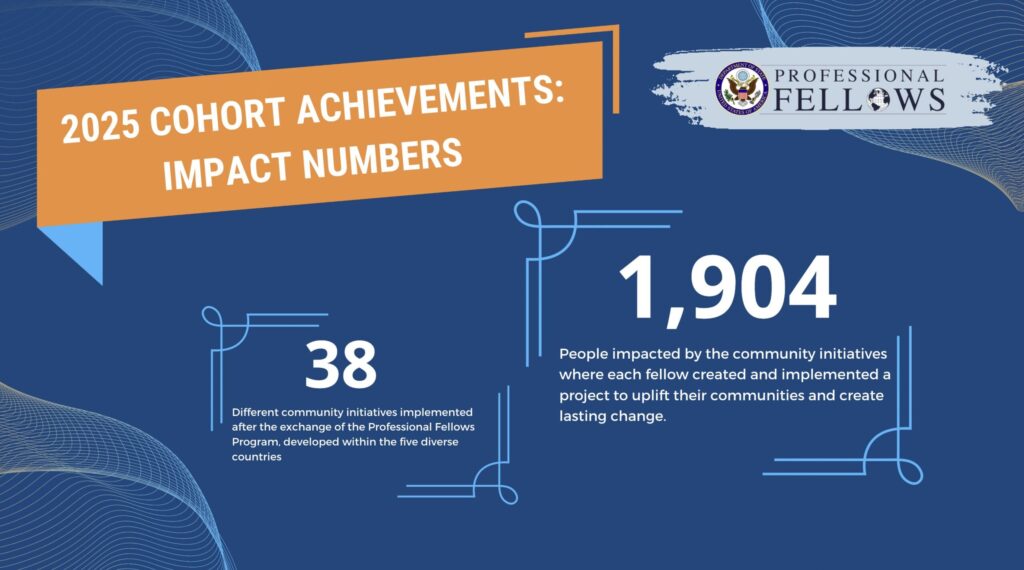
Community impact is created through the effective spread of practical tools and knowledge, which is exactly what the Fall 2025 Cohort did with their Community Initiatives between November 2025 and March 2026. As shown in the visual above, the fellows —representing a variety of backgrounds and disciplines—impacted approximately 1,904 people across Algeria, Tunisia, Morocco, Lebanon, and Egypt. Through a diverse range of projects, these professionals built on their existing systems and talents while integrating new inspiration, strategy, and innovation from their fellowship experience. They demonstrated a strong commitment and determination to turn shared learning into durable impact across key sectors such as public sector leadership, higher education, private sector innovation, youth engagement, technology, and early workforce readiness.
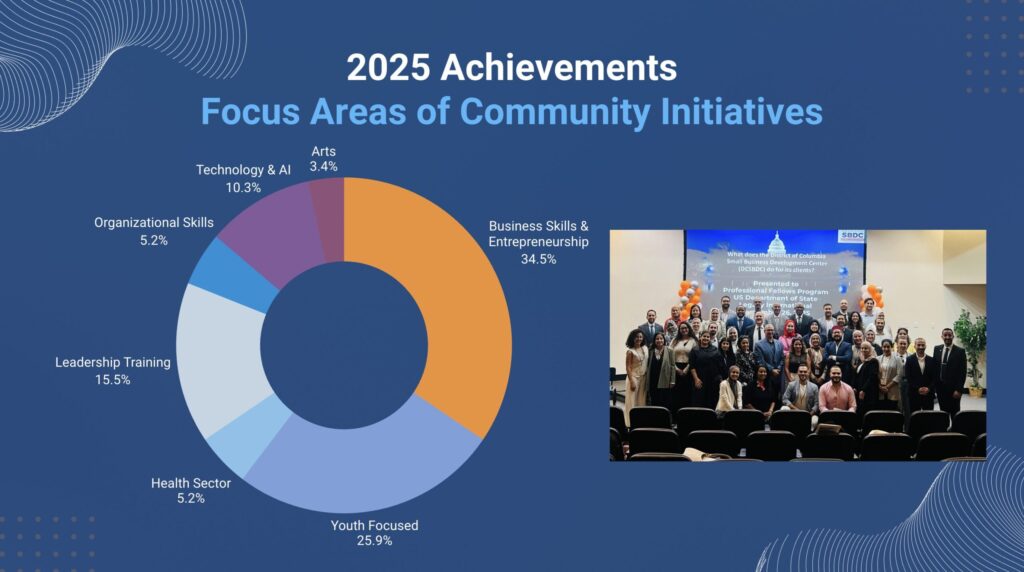
Fellows’ achievements included meaningful work through leadership, entrepreneurship, and organizational effectiveness. After implementing his project, The Faculty Catalyst Program, which targeted faculty members and teaching assistants at Suez Canal University, Egyptian fellow Afnan Barakat–hosted at Big Idea Center in the University of Pittsburgh–expressed how the impact of his Community Initiative is tied to the program as a whole:
“Participating in the PFP program was transformative. It shifted my worldview from implementing isolated projects to designing sustainable systems for impact. This follow-on project embodies that lesson. Instead of just creating another student competition, I focused on strengthening the support system—the faculty—which will endure and scale. The program taught me the importance of stakeholder mapping and partnership…This experience has reinforced my belief that true development in my community comes from empowering multipliers and building bridges between different ecosystems—academia, industry, and investment—to create a self-sustaining cycle of innovation.”
In Egypt, around 629 people were impacted through the implementation of Community Initiatives. This is why fellow Aya Aly, hosted at Tree Folks in Austin, Texas, mentions, “This initiative represented more than a workshop; it was an exercise in translating complex regulatory evolution into accessible, actionable knowledge,” and added, “The PFP journey has reinforced my belief that impactful leadership begins with informed communities — and that sustainable change requires both structural frameworks and empowered individuals ready to implement them.”
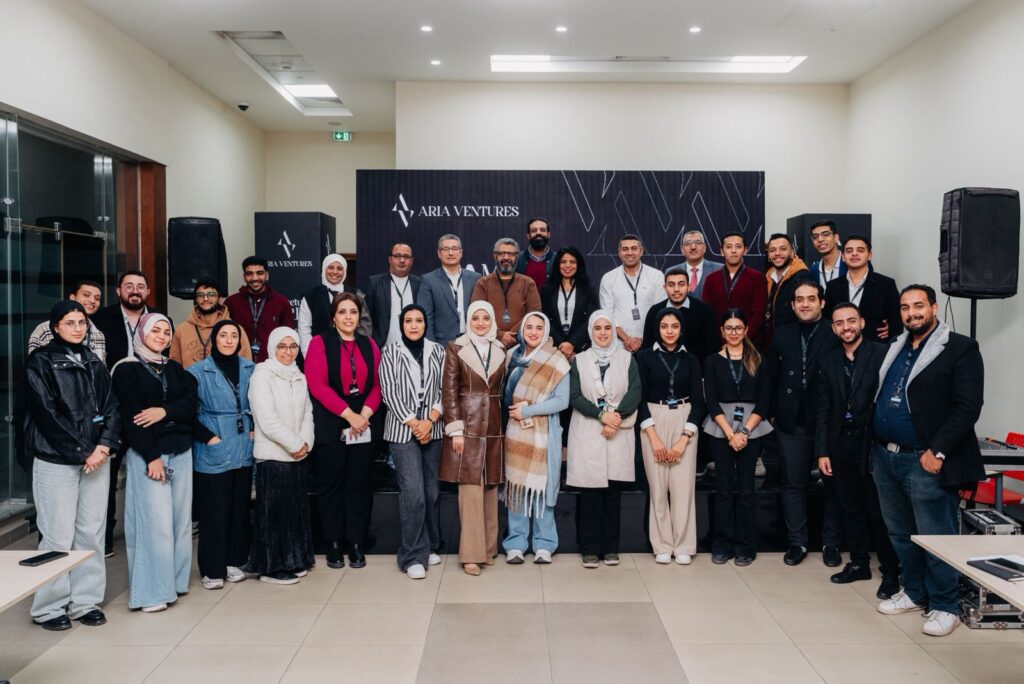
Lebanese fellows, with initiatives ranging from entrepreneurial education programs focused on social innovation to youth capacity-building initiatives, impacted around 223 people. Reflecting on his project, Play to Inspire, Fellow Paramaz Yepremian noted, “My fellowship with Mosaic Youth Theatre of Detroit allowed me to learn facilitation techniques, including inclusive engagement, structured warm ups, and reflection tools. I translated these approaches into a practical toolkit, which I applied during my community initiative workshop, enhancing participation, collaboration, and confidence among participants in an accessible environment.”
Similarly, most initiatives in Algeria embraced the excitement and enthusiasm of youth and small- to medium-sized business owners and entrepreneurs, benefiting around 387 people. The experience of Algerian fellow Mohamed Radji Sahari, truly encapsulates the whole purpose of Legacy’s two-way exchange program. He recalled: “Having worked with Americans at the American Institute and gained experience in an American style work environment, I was hugely impacted by its leadership style which was completely different from the ones I’ve had before – it was way more efficient!
Working with the Center for Excellence in Public Leadership at The George Washington University in Washington D.C. through the Professional Fellows Program has amplified my admiration for the American style work culture . I was inspired, and got motivated to bring this piece of knowledge and expertise to the Algerian corporate world.” His Community Initiative, The Algerian Leadership Program (ALP), like other projects, will continue to grow and expand, allowing for sustainability through long-term collaboration with the United States and other important local actors.
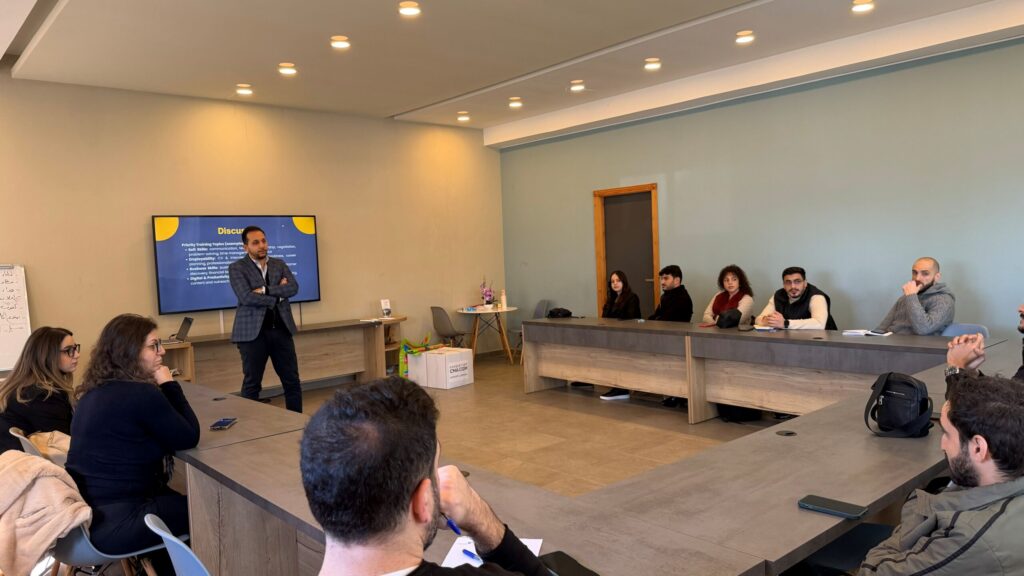
In Tunisia, 120 individuals were directly impacted through the Community Initiatives of the fellows, most of which were equipped with a range of tools, including export readiness, emerging technologies such as AI, structured debate, essential soft skills, and organizational methodologies. While the initiatives reached diverse audiences, all projects ensured that emerging leaders were better prepared and had a variety of strategies at their disposal. For example, in her training for representatives of civil society organizations and NGOs in Tunis, Sarra Hannachi–hosted at The Atlantic Council in Washington D.C.–partnered with ComDev Africa to make the project scalable, enabling participants to learn new frameworks to later integrate them into their own organizations.
Importantly, she voiced: “My PFP experience was a turning point for me in terms of professional clarity and network expansion. This community initiative was inspired by all the things I’ve learned, particularly from other fellows. As much as the fellowship was a great discovery and experiment with a US host organization that I exchanged a lot with, the other fellows also played an important role in motivating me, providing me with resources that made my PFP and community initiative both successful. The mentorship I received from my fellowship supervisor was also significantly important and reminded me of how locally relevant my work is, even if it follows global standards. Consequently, I did promote the PFP opportunity to more Tunisians in civil society and I wish this program could continue to benefit American institutions and Tunisian talents.”
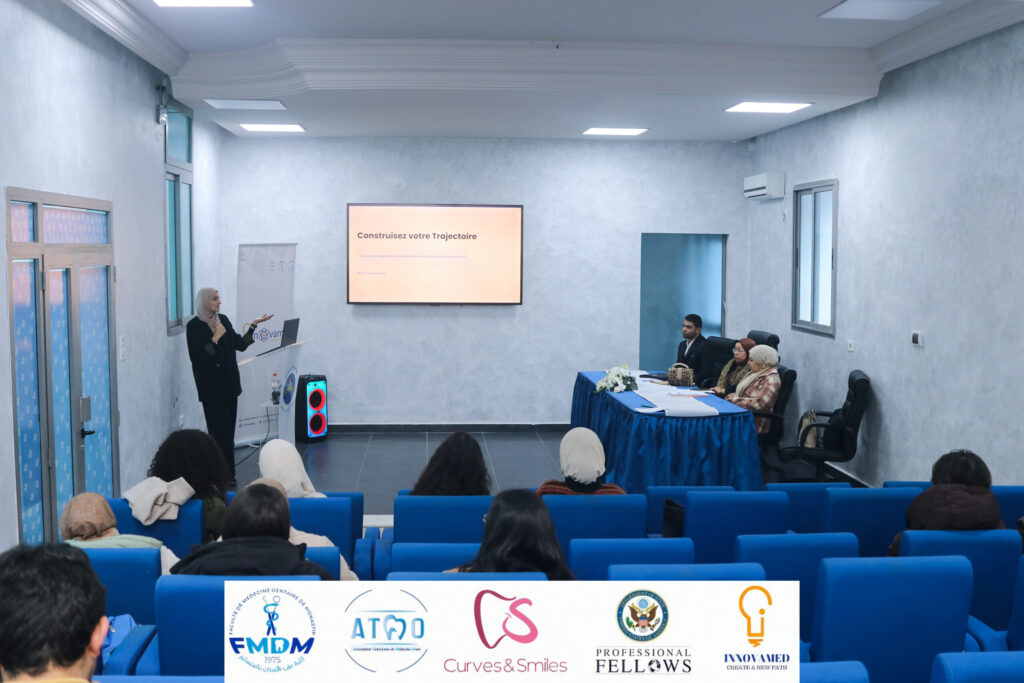
A total of 545 people benefited from the Community Initiatives carried out in Morocco. Indeed, the Moroccan fellows exhibited not only the innovation across the country’s ecosystems but also the power and impact of projects that leverage available resources and respond to stakeholders’ needs. They incorporated and disseminated new ideas, methods, and inspiration from their time in the U.S., including knowledge of technology and AI, business best practices, psychosocial tools, storytelling, and the richness of blending innovations and traditions—perspectives enriched by the fresh insights gained during their fellowship. As fellow Soukaina Arriani–hosted at Arterberry Cooke Architecture in Austin–highlighted:
“The PFP experience strengthened my leadership, strategic thinking, and confidence as an entrepreneur and architect. It reshaped my perspective on structure, scalability, and long-term impact through exposure to the US professional ecosystem. Now I feel that I belong to a large family of exchange program leaders, connected by shared values, growth, and mutual support.”
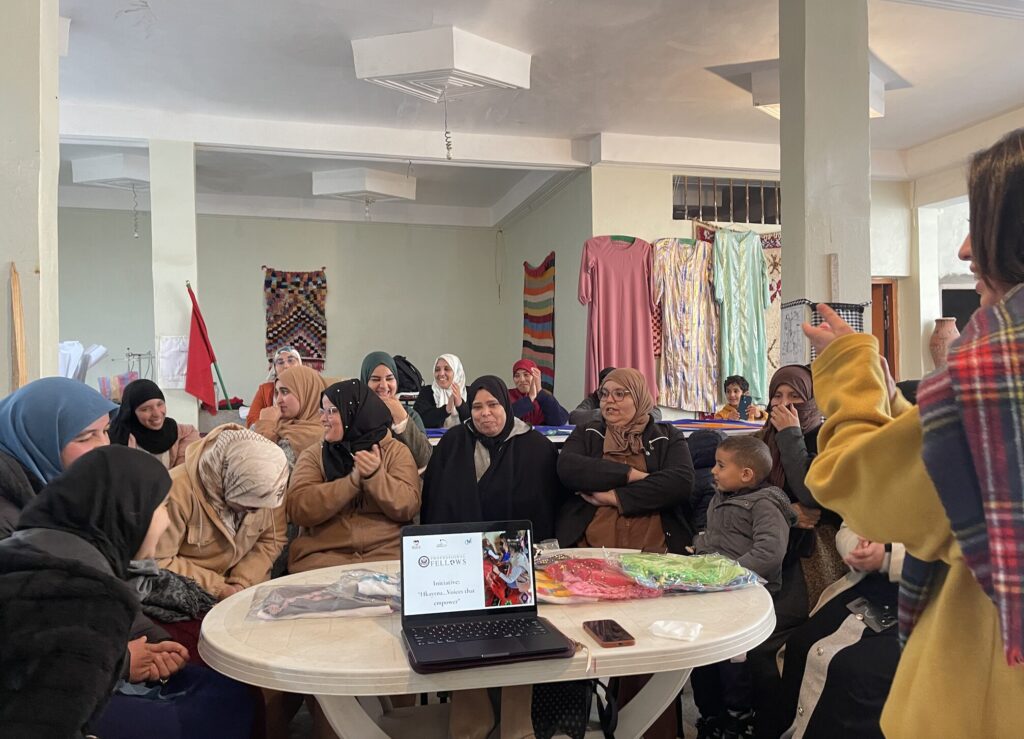
Each project advanced the goals of development, change, and community, reflecting the fellows’ energy and strong commitment to public service and collective growth. Their initiatives were rooted in the values of knowledge sharing and meaningful work. This segment of the program is not about creating something entirely new, but about fostering continual reinvention for improvement—building on what works, adapting lessons learned, and embracing creativity and personal passion. In doing so, fellows are empowered to drive the innovation and meaningful impact they have long envisioned for their countries and for the world.
About the Author: Isabella Cuevas Celis is the Spring 2026 International Program Development and Communications Intern for the Professional Fellows Program, a U.S. Department of State initiative administered by Legacy International.